

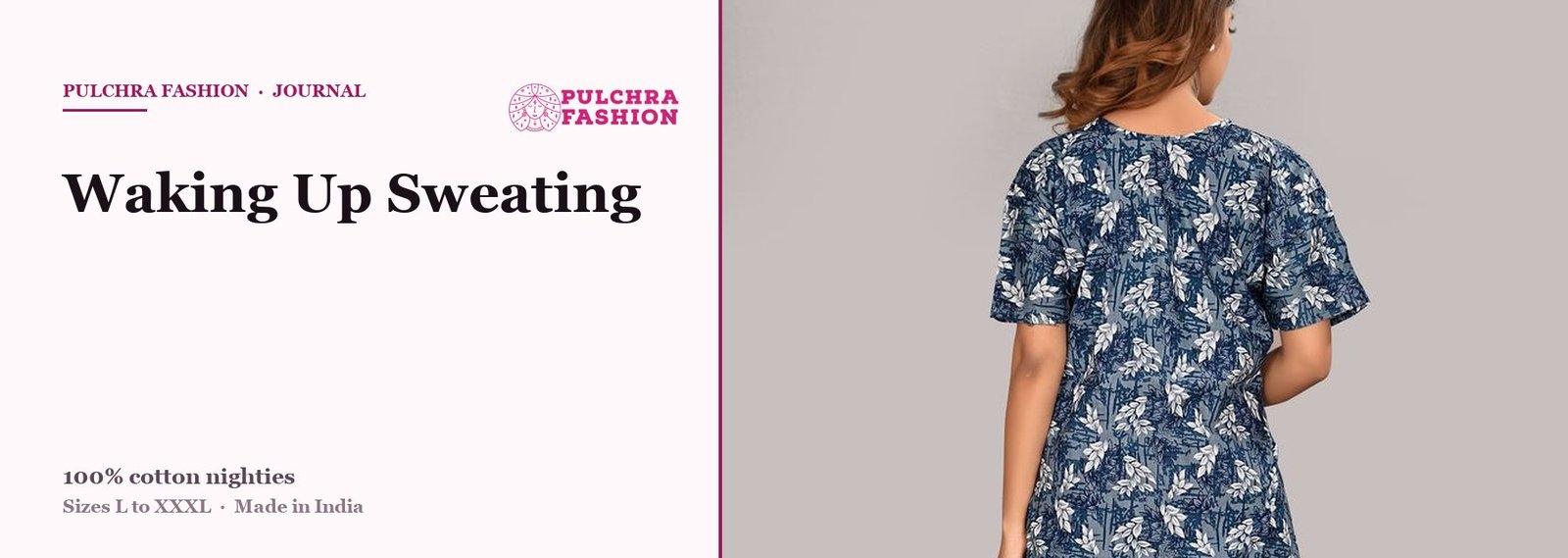
Waking at 2am damp, pushing the blanket off, pulling it back twenty minutes later because you have gone cold — it is one of the most common sleep complaints women describe, and the cause is not always medical.
How your body cools itself at night
Core temperature naturally drops as you fall asleep and stays low through the night. Your body manages that partly by releasing moisture through the skin. If that moisture can evaporate, you stay comfortable. If it cannot, it sits on your skin, you feel hot, you kick off the covers, the damp layer then cools and you feel cold. That cycle is what wakes people repeatedly.
Why fabric decides it
Cotton is a hollow natural fibre. It absorbs moisture into the fibre itself and releases it to the air, and the weave lets air pass through. Polyester is a solid plastic filament. Moisture cannot enter the fibre, so it sits between cloth and skin, and a tight satin weave gives it nowhere to go.
This is why the same person can sleep comfortably in a cotton nighty and wake damp in a satin one on the same night, at the same temperature. The comparison is laid out in cotton versus satin.
Fit matters as much as fibre
A fitted nighty presses the cloth against your skin, which removes the air gap that evaporation needs. A loose A-line cut keeps fabric off the body and lets air move as you turn over — see why the cut matters.
What to change tonight
- Switch to a 100% cotton nighty, loose and ankle length.
- Open the top button or two — the throat is where heat is felt first.
- Use cotton bedsheets. A polyester sheet undoes a cotton nighty.
- Keep a second nighty beside the bed so a change at 3am takes ten seconds.
Narrowing it down
| Pattern | Points towards |
|---|---|
| Only on hot nights; stops in winter | Fabric and bedding |
| Damp but not drenched; you dry out quickly in cotton | Normal thermoregulation |
| Flushes that build, then pass, several times a night | Hormonal — see the perimenopause piece |
| Drenching the sheets, any season | Worth a doctor’s opinion |
| Started with a new medication | Worth asking your doctor about |
When it is not the nightwear
See a doctor if you are drenching the sheets rather than feeling damp, if it comes with fever, unexplained weight loss or a persistent cough, or if it began suddenly with no change in weather or bedding. Night sweats also accompany perimenopause, thyroid problems and some medications — this piece covers the menopause pattern in more detail.
Browse breathable cotton nighties.
Questions we get asked
Can nightwear really make this much difference?
If the cause is trapped moisture, yes. Cotton absorbs sweat into the fibre and releases it; polyester leaves it sitting on your skin, which is what starts the hot-then-cold cycle that wakes people repeatedly.
Does a looser nighty help?
Yes. Evaporation needs an air gap. A fitted nighty presses cloth against the skin and removes it.
When should I see a doctor?
If you are drenching the sheets rather than feeling damp, if it comes with fever, unexplained weight loss or a persistent cough, or if it started suddenly with no change in weather or bedding.