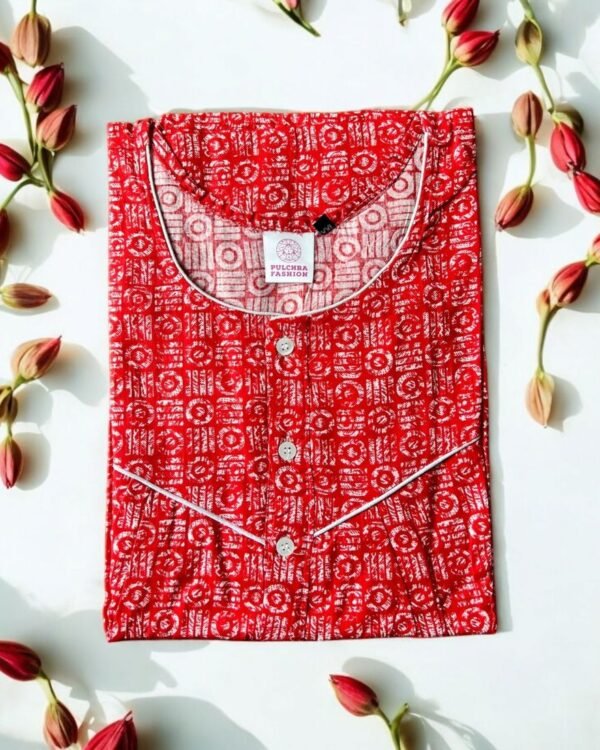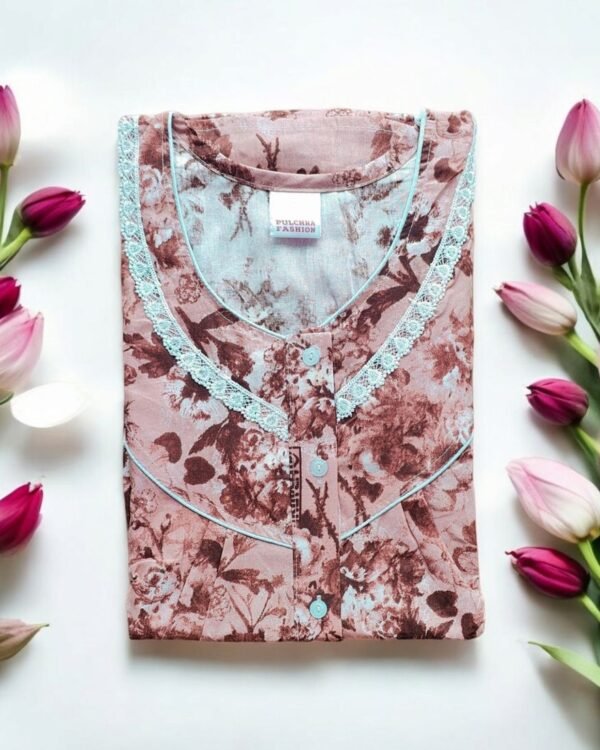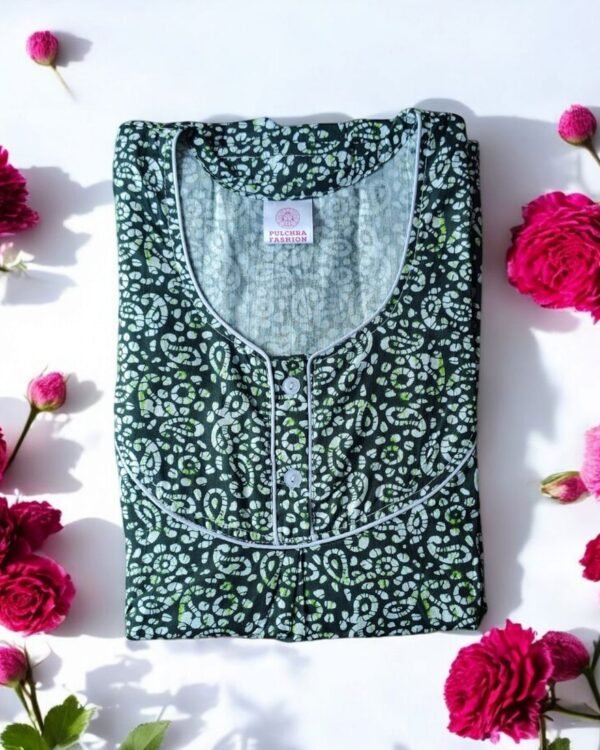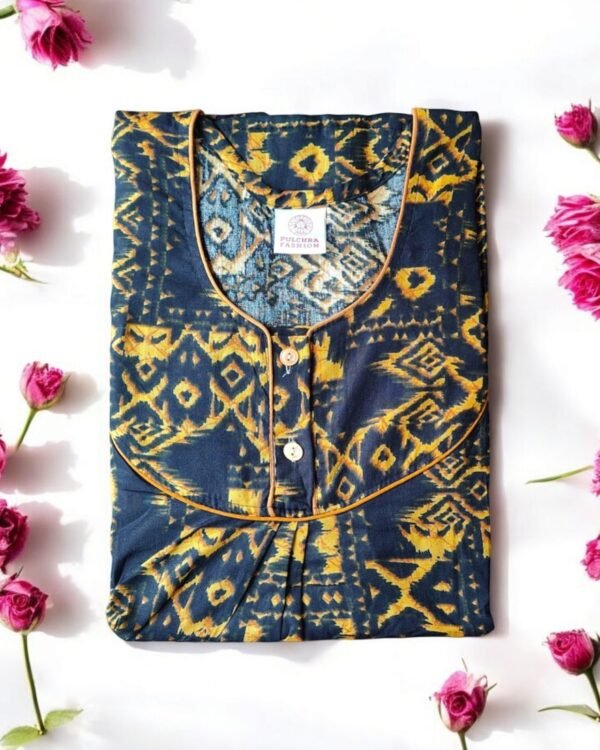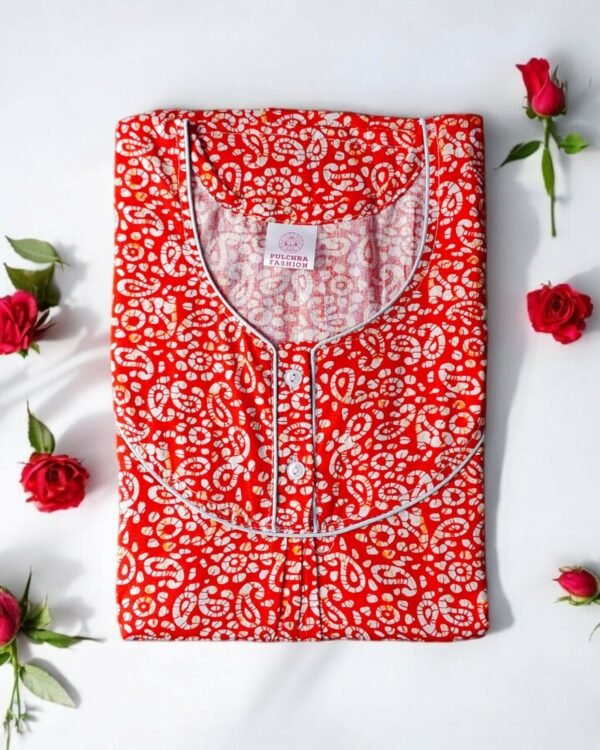

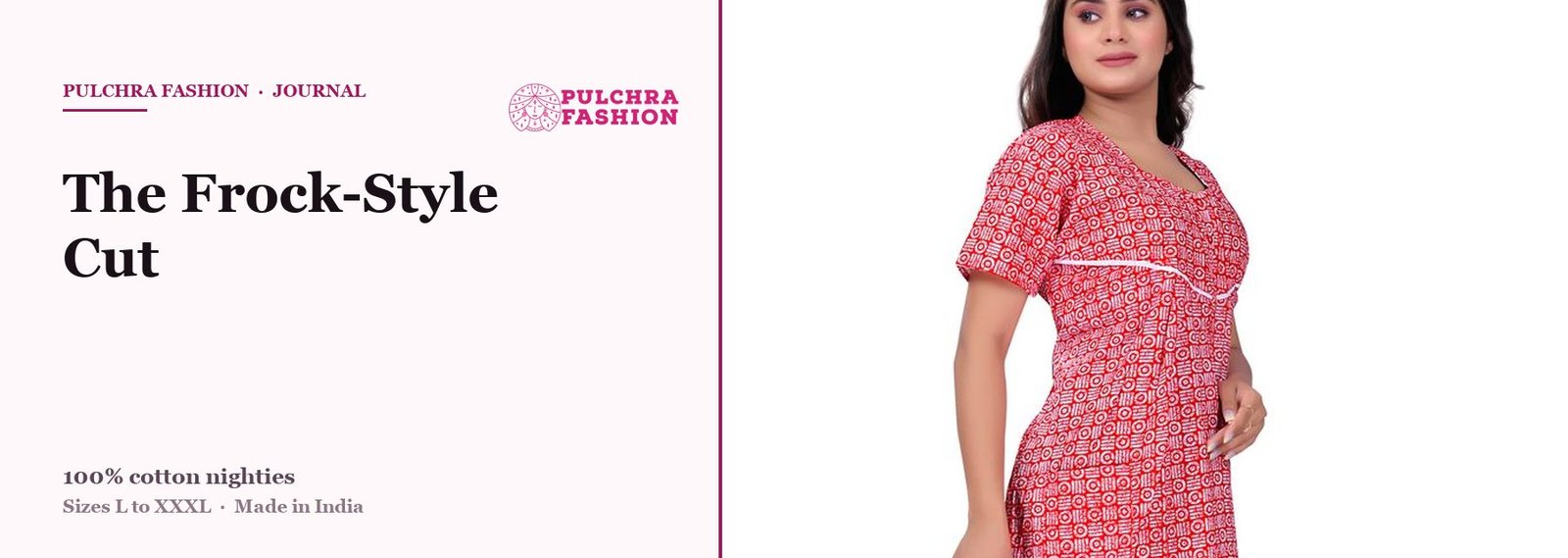
Two nighties can use the same fabric, the same print and the same size label, and one will be comfortable while the other clings all day. The difference is almost always the cut.
What “frock style” means
A frock-style or frock-model nighty is cut with a fitted yoke across the shoulders and chest, then flares outward from below the bust to the hem. A straight-cut nighty is essentially a tube: the same width at the chest and the hip.
The flare does two things. It stops fabric touching the body at the stomach and hip — the places most women do not want anything clinging — and it lets air move inside the garment as you walk, which makes a real difference on a hot night.
Why it costs more
A flared panel uses noticeably more cloth per garment and cannot be cut as efficiently from a roll. That is the entire reason budget nighties are straight-cut. If a nighty is unusually cheap, the cut is usually where the saving came from.
Who benefits most
- Anyone in XXL or XXXL. A straight cut at a large size is a tube, and it clings everywhere.
- Pregnant women. The flare leaves room through the bump without a separate maternity cut. See feeding and maternity.
- Anyone who sits cross-legged. There is enough fabric to do it without hitching the hem up.
- Women who feel the heat. Airflow inside the garment matters as much as the fabric.
How to tell from a photo
Look at the hem width compared with the shoulder width. On a frock-style nighty the hem is visibly wider — the silhouette is a soft triangle. If the garment is the same width top to bottom, it is a straight cut, whatever the listing calls it. A flat-lay photo makes this easy to judge; a photo on a model standing straight on can hide it, which is sometimes the point.

Straight cut versus frock cut
| Straight cut | Frock / A-line cut | |
|---|---|---|
| Fabric used | Less | Noticeably more |
| At the hip | Clings | Falls away |
| Airflow | Limited | Moves as you walk |
| Sitting cross-legged | Rides up | Enough fabric |
| At XXL and above | Gets worse | Gets more useful |
| Over a bump | Needs a maternity cut | Usually fine as-is |
| Typical price effect | Cheaper to make | Adds roughly ₹30–60 |
Our view: of everything that separates a nighty you love from one you tolerate, the cut matters most and gets discussed least. If you are choosing between a prettier print in a straight cut and a plainer one in an A-line, take the A-line. You will wear it three times as often.
Where the flare should start
There is a wrong way to do this too. If the flare begins at the waist, you have a dress, and it will pull across the stomach and sit on a caesarean scar or a full stomach after dinner. The flare should begin at the yoke seam, just under the bust, so that nothing below the chest touches the body with any pressure. That is also what makes the same garment work through pregnancy and afterwards — see maternity nighties and what to wear after a caesarean.
Every Pulchra nighty is cut A-line from the yoke. See the full design gallery, browse all cotton nighties, or go to the plus size range where the cut matters most.