

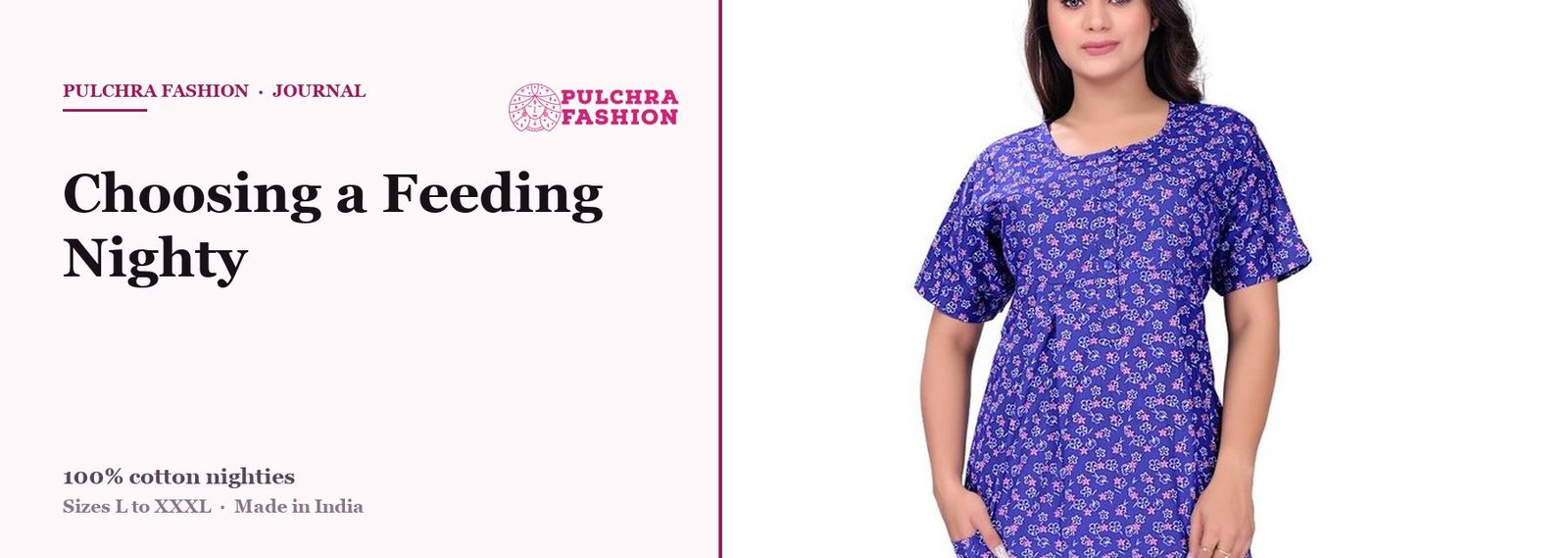
For the first few months after a baby, a feeding nighty is close to a uniform. You will wear it through the night, through the day, and through more washes than any other garment you own. It is worth getting right.
1. Buttons or zip?
Both open. The practical differences: a zip is faster one-handed, but metal gets cold, can catch skin, and presses a hard line against a baby’s face. Buttons are softer, lie flat, and a full placket opens just as wide. Most mothers who try both end up preferring buttons for night feeds. All our nighties use a full button placket — see feeding nighties.
2. Fabric, because of night sweats
Postpartum night sweats are normal and often heavy — the body is shedding the extra fluid of pregnancy, and hormones are shifting rapidly. It can last for weeks. A synthetic nighty turns that into a miserable damp night; cotton absorbs and releases it. This is not a small detail at a time when sleep is already broken.
3. Size: go up
Your body will not be its pre-pregnancy size for a while, and it should not have to be. Order one size above your pre-pregnancy size — most new mothers are most comfortable in XXL or XXXL. Loose is also kinder on a caesarean scar, which stays tender to pressure for months.
4. The cut
A-line, falling from the yoke. It leaves room through a post-delivery stomach without clinging, and it works through pregnancy too, so one purchase covers both. See why the cut matters.
5. A pocket
Sounds trivial until you are feeding at 3am and your phone is in another room. A side-seam pocket holds it, which matters when feeds are long and you are awake for them.
Buttons versus zip
| Button placket | Zip | |
|---|---|---|
| One-handed at 3am | Manageable | Faster |
| Against a baby’s face | Soft, lies flat | Hard; cold in winter |
| Catching skin | No | Possible |
| Washing | Fine | Teeth can snag the fabric |
| If it fails | Replace one button | The garment is finished |
We make buttons only, and that is a deliberate choice rather than a cost saving. Plenty of mothers prefer a zip for speed, so it is worth knowing the trade-off either way.
How many do you need?
More than you think — four is realistic. Between night sweats, leaking milk and the general chaos, you will change more often than usual, and the washing never quite catches up. Combo packs make that less painful, and the maths is in are combos worth it.
What to skip
Nursing nighties with complicated internal flaps and clips — they are fiddly in the dark and the fabric bunches. A simple full placket does the same job and washes better. Skip anything with a tight band under the bust, which is uncomfortable when engorged.
Questions we get asked
How many feeding nighties do I need?
Four is realistic. Between night sweats, leaking milk and general chaos, you will change more often than usual and the washing never quite catches up.
What size after delivery?
One size above your pre-pregnancy size. Most new mothers are most comfortable in XXL or XXXL, and loose is also kinder on a caesarean scar.
Are nursing flaps and clips worth it?
In our view, no. They are fiddly in the dark and the fabric bunches. A simple full placket does the same job and washes better.


