

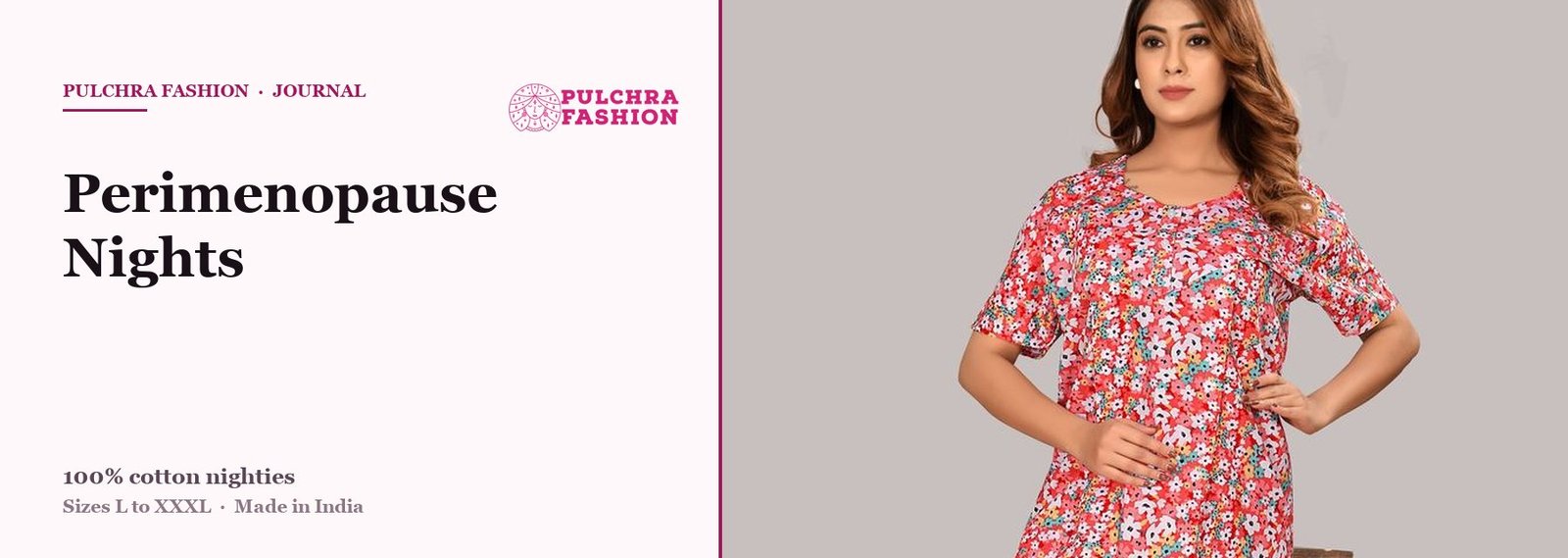
Somewhere in the forties, for most women, the nights change. A flush builds, you throw the covers off, you are drenched, then ten minutes later you are shivering in a damp nighty. It can happen several times a night and it is exhausting.
What is happening
Falling oestrogen affects the part of the brain that regulates body temperature, narrowing the range it treats as comfortable. A small rise in core temperature that you would not have noticed at thirty now triggers a full cooling response: blood vessels open, you flush, you sweat heavily.
No nighty prevents that. What nightwear changes is the aftermath — how fast the sweat evaporates, and therefore how long you lie awake cold and damp.
What helps
- 100% cotton against the skin. It absorbs the sweat and releases it, so you dry out in minutes rather than lying in it. Synthetic nightwear holds it, which is why the cold phase lasts so much longer.
- A front button placket. Open it at the first sign of a flush and you lose heat from the chest and throat immediately. This is the single most useful feature — see front open nighties.
- Loose and ankle length. Air moves inside the garment; you can still keep your legs covered when the chill arrives.
- Layers on top, not thicker nightwear. A sheet and a separate light blanket you can remove beats one heavy quilt.
The practical setup
Women who manage this well tend to do the same things: a spare cotton nighty folded on the bedside table, a small towel to blot rather than shower at 3am, cotton bedsheets, and a fan on low even in cool weather. Changing a damp nighty takes thirty seconds and saves an hour of lying awake.
Having three or four nighties in rotation stops becoming a luxury at this stage — combo packs make that less expensive.
The bedside setup
| What | Why it helps |
|---|---|
| A spare cotton nighty, folded within reach | Changing takes 30 seconds instead of an hour awake |
| A small towel | Blot rather than shower at 3am |
| A sheet plus a separate light blanket | Remove one layer instead of all of it |
| Cotton bedsheets | A polyester sheet undoes a cotton nighty |
| A fan on low, even in cool weather | Moving air speeds up the drying phase |
| Water by the bed | You lose more fluid than you think |
What nightwear can and cannot do: it will not stop a hot flush. What it changes is the recovery — whether you are dry again in four minutes or lying awake cold and damp for forty. That is the difference between one broken night and a month of them.
When to talk to a doctor
If night sweats are disrupting sleep most nights, or come with heavy or very irregular bleeding, palpitations or low mood, it is worth a conversation. There are effective treatments, and perimenopause is not something you have to simply endure. Night sweats also have non-hormonal causes — covered here.
Browse cotton nighties or plus sizes.