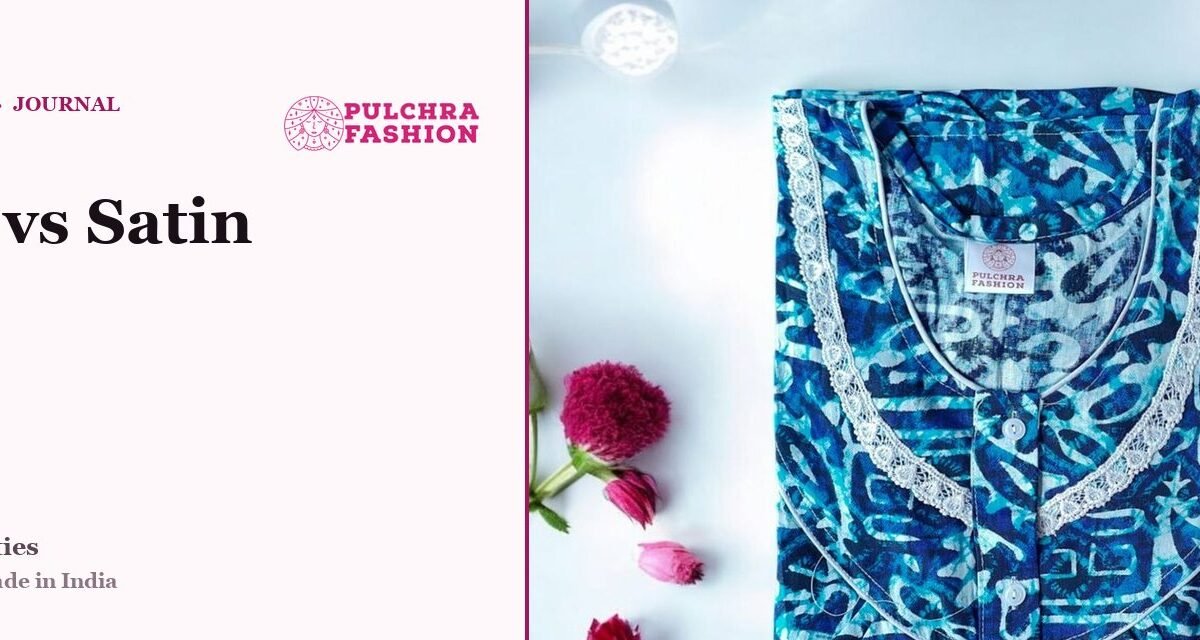

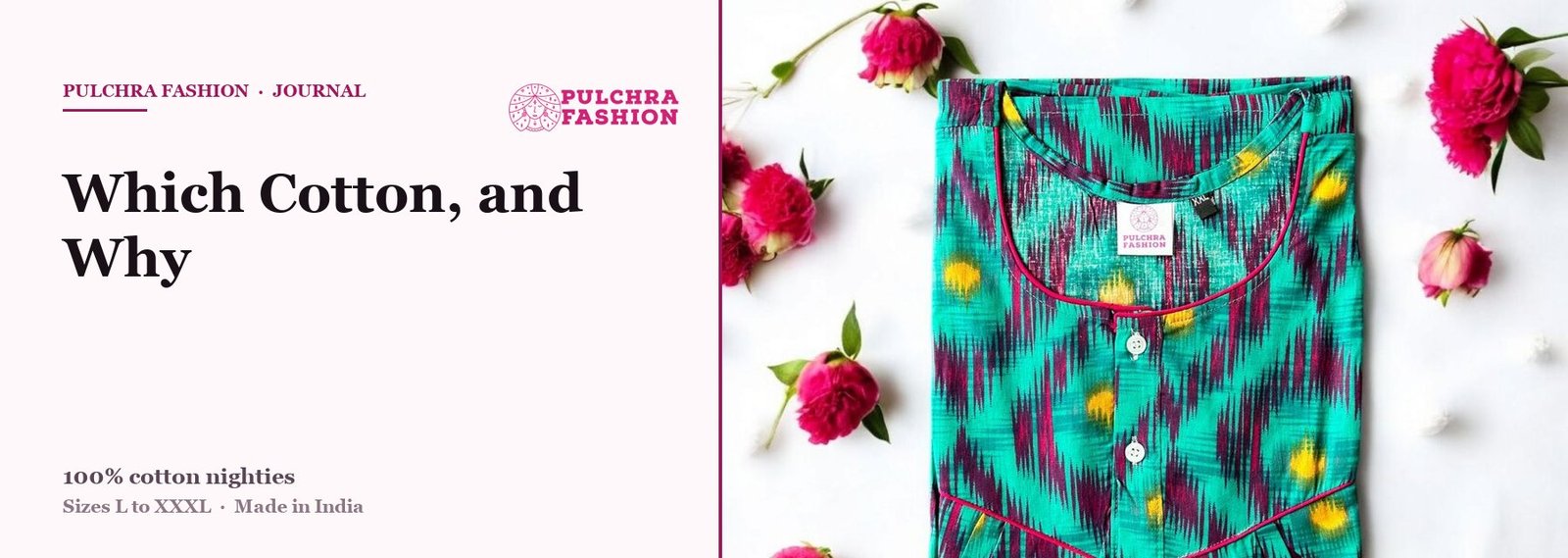
“Cotton” on a nightwear label covers a dozen very different fabrics, and some of the things sold as cotton are not cotton at all. Here is what you are actually choosing between.
Woven cottons
Poplin / cambric. Plain-woven, medium weight, smooth and opaque. This is the standard for Indian cotton nighties and for good reason: it breathes well, takes print crisply, survives hundreds of washes and does not go transparent. It is what we use.
Mul / malmal. Very fine and light, beautifully cool, but thin enough to need care about transparency and prone to tearing at stress points like the placket.
Cotton voile. Light and semi-sheer. Lovely in theory, usually impractical as a full nighty.
Knitted cottons
Hosiery (jersey). Soft and stretchy, like a t-shirt. Comfortable at first, but it clings as it stretches, pills at the underarm and loses shape at the neck within months. Popular because it feels soft in the shop.
Not actually cotton
Rayon / viscose. Plant-derived but chemically processed. Drapes beautifully, holds moisture against the skin, and tears when wet.
Polyester satin. The shiny nighty. It photographs beautifully and traps heat completely — the reason it feels clammy within an hour. Detail in cotton versus satin.
What to look for on a label
- “100% cotton” with no qualifier. Anything described as cotton-rich, cotton-feel or cotton blend contains polyester.
- Woven, not knitted, if you want it to keep its shape.
- A printed design rather than plain — it hides creases and marks. See printed cotton nighties.
The fabrics side by side
| Fabric | What it is | Breathes | Keeps shape | Lasts | Verdict |
|---|---|---|---|---|---|
| Cotton poplin / cambric | Woven cotton | Very well | Yes | Years | The right default |
| Mul / malmal | Fine woven cotton | Exceptionally | Yes | Tears at stress points | Lovely but delicate |
| Hosiery (knit) | Knitted cotton | Reasonably | No — stretches | Months | Soft on day one, baggy by month six |
| Rayon / viscose | Processed cellulose | Poorly | Drapes, then sags | Weak when wet | Avoid for nightwear |
| Polyester satin | Plastic filament | Barely | Yes | Snags easily | For photos, not for sleeping |

A word on weight
Fabric weight is quoted in GSM — grams per square metre. For a cotton nighty, somewhere around 100 to 130 GSM is the sensible band. Below that it starts to go translucent at the seat when you sit in daylight, which is the complaint behind most “it was see-through” reviews. Much above it and the nighty is warm and slow to dry, which defeats the purpose in an Indian summer. Very few sellers publish GSM; if one does, it is usually a sign they know their supply chain.
The one-line version: woven beats knitted, natural beats synthetic, and printed beats plain. Everything else is preference.
The short answer
For Indian weather, a woven 100% cotton poplin or cambric, printed, cut loose and ankle length. It is not the softest fabric in the shop on day one — a hosiery knit will always win that test in your hand — but it is the one still comfortable in year three, and softness is the one quality cotton gains with washing rather than loses. Everything in our range is made from it, and washing it properly is most of what keeps it that way.